
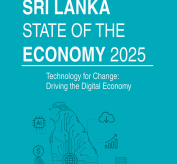

Technology for Change: Driving Structural Growth through Digitalisation in Sri Lanka
The launch of the IPS’ annual flagship publication, Sri Lanka: State of the Economy 2025, focused on ‘Technology for Change: Driving the Digital Economy’, explores how digital integration can be leveraged to facilitate structural reforms and sustain long-term economic growth in Sri Lanka. Digitalisation can boost growth through multiple means, including improving the competitiveness of trade, incentivising entrepreneurship, facilitating infrastructure, strengthening human capital, and enhancing resilience to shocks.
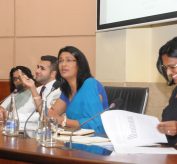
A Low Productivity Trap? Strengthening Skills, Jobs, and Public Sector Efficiency in Sri Lanka
Sri Lanka experienced six consecutive quarters of negative economic growth up to the third quarter of 2023. This downturn has had a direct impact on the labour market, leading to lower wage rates and discouraging workforce participation and skill development. As a result, productivity levels continue to fall, creating a vicious cycle known as the “low productivity trap”, which hampers further economic recovery.
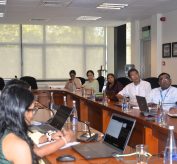
Expanding Ed-tech Through Partnerships, Collaborations, and AI to Improve Quality Education: Insights for Sri Lanka
The use of technology in education has notably enhanced productivity and resilience in the educational sector. As the world increasingly turns to educational technology (Ed-tech) solutions, it is essential to align these advancements with Sustainable Development Goal 4 (SDG 4), which advocates for inclusive and equitable quality education for all. The Institute of Policy Studies of Sri Lanka (IPS) recently hosted a hybrid Roundtable Discussion titled “Ed-tech Towards Achieving SDGs,” offering valuable perspectives on the role of Ed-tech in bridging educational gaps and the facilitators and barriers to the expansion of Ed-tech going ahead.
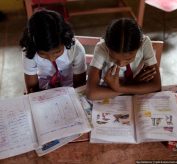
Edtech for Marginalised Children in Sri Lanka: Insights from MENA and Other Asian Countries
The United Nations marks this year’s International Day of Education under the theme “learning for lasting peace” highlighting the important role played by inclusive and equitable education in the sustenance of peace and development.
However, the path to achieving equitable access to quality education by 2030 seems challenging, with only 1 in 6 countries projected to reach this goal. This underscores the need to reconsider current education systems, specifically across the developing world. In Sri Lanka, despite having achieved near-universal participation in education, there is still a long way to go in achieving equitable education for vulnerable groups such as children with disabilities, out-of-school children, school dropouts, migrant workers’ children, children from minority communities etc.

Rising School Dropouts: The Plight of Estate Children in Sri Lanka
Although Sri Lanka has performed well in basic education indicators such as a high literacy rate and near-universal participation in primary and secondary schooling, there are striking disparities across regions in the country. Specifically, the education performance of the estate sector consisting of plantation communities is dismal, with a high level of school dropouts. Notably, the prevalence of child labour in a community is revealed to significantly impact estate children dropping out of school. The worsened financial difficulties suffered by these estate children post-pandemic, along with the ongoing economic crisis in the country, have led them to engage in economic activities to earn income so that they can afford their basic needs. Based on a study carried out by the Institute of Policy Studies of Sri Lanka (IPS), this blog discusses the issue of school dropouts in the estate sector and how prolonged school closures following the COVID-19 outbreak and the ongoing economic crisis have increased school dropouts in estate regions.
Demystifying Hawala/Undiyal – The Not So Dismal Science:[…] believed that informal fund transfer operations in Sri Lanka have expanded considerably due to the wide gap between the…