
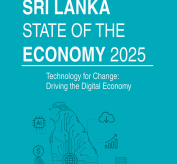

Technology for Change: Driving Structural Growth through Digitalisation in Sri Lanka
The launch of the IPS’ annual flagship publication, Sri Lanka: State of the Economy 2025, focused on ‘Technology for Change: Driving the Digital Economy’, explores how digital integration can be leveraged to facilitate structural reforms and sustain long-term economic growth in Sri Lanka. Digitalisation can boost growth through multiple means, including improving the competitiveness of trade, incentivising entrepreneurship, facilitating infrastructure, strengthening human capital, and enhancing resilience to shocks.

Priorities in Focus: Will Budget 2025 Address Sri Lanka’s Agricultural Challenges?
The agricultural sector in Sri Lanka has long been a pillar of the nation’s economy, yet its decline reflects a complex interplay of economic shifts, policy decisions, and underutilised potential. Agriculture’s contribution to the overall economy in Sri Lanka has gradually diminished over time, while the agricultural labour force has shrunk at a slower rate. This disparity between a declining sector and a stagnant workforce, coupled with the failure to address structural changes by improving land and labour productivity, has led to poor sector performance, particularly in terms of food security and farm income. Additionally, unproductive public spending in the form of inefficient allocation, short-term concentration, and neglect of crucial areas is an important contributory factor. In this context, it is crucial to assess whether public expenditure allocation in Sri Lanka has undergone significant shifts aimed at unlocking the agriculture sector’s potential while advancing food security and fostering rural development.
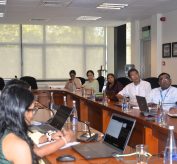
Expanding Ed-tech Through Partnerships, Collaborations, and AI to Improve Quality Education: Insights for Sri Lanka
The use of technology in education has notably enhanced productivity and resilience in the educational sector. As the world increasingly turns to educational technology (Ed-tech) solutions, it is essential to align these advancements with Sustainable Development Goal 4 (SDG 4), which advocates for inclusive and equitable quality education for all. The Institute of Policy Studies of Sri Lanka (IPS) recently hosted a hybrid Roundtable Discussion titled “Ed-tech Towards Achieving SDGs,” offering valuable perspectives on the role of Ed-tech in bridging educational gaps and the facilitators and barriers to the expansion of Ed-tech going ahead.
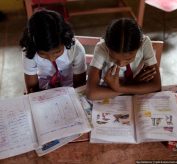
Edtech for Marginalised Children in Sri Lanka: Insights from MENA and Other Asian Countries
The United Nations marks this year’s International Day of Education under the theme “learning for lasting peace” highlighting the important role played by inclusive and equitable education in the sustenance of peace and development.
However, the path to achieving equitable access to quality education by 2030 seems challenging, with only 1 in 6 countries projected to reach this goal. This underscores the need to reconsider current education systems, specifically across the developing world. In Sri Lanka, despite having achieved near-universal participation in education, there is still a long way to go in achieving equitable education for vulnerable groups such as children with disabilities, out-of-school children, school dropouts, migrant workers’ children, children from minority communities etc.

Food Security in the BIMSTEC Region: Lessons from Sri Lanka’s Smart Farming
Sri Lanka is hosting the fifth Bay of Bengal Initiative for Multi-Sectoral Technical and Economic Cooperation (BIMSTEC) summit from 28-30 March 2022. Established in 1997, BIMSTEC is a seven-member regional organisation comprising Bangladesh, Bhutan, India, Nepal, Myanmar, Sri Lanka, and Thailand. BIMSTEC pays significant attention to agriculture and food security, with agriculture included as a stand-alone sector in 2005 in recognition of its importance. Sri Lanka, the lead country for the coordination of activities in the Science, Technology and Innovation Sector, is in the midst of a food crisis even as it plays host. Against this backdrop, this blog discusses food security challenges in the BIMSTEC region, Sri Lanka’s experiences in smart farming, and its expectations from the summit.
Demystifying Hawala/Undiyal – The Not So Dismal Science:[…] believed that informal fund transfer operations in Sri Lanka have expanded considerably due to the wide gap between the…