

Beyond the Crisis: Sectoral Paths to Durable Growth
The Sri Lankan economy has faced a series of external and internal shocks in recent years that weakened its long-term growth outlook. Despite defying post-crisis growth trajectories, fresh uncertainties from oil price shocks and climate-related risks suggest that the policy context to accelerate growth will be even more challenging. In this context, select policy recommendations to strengthen Sri Lanka’s economic foundations toward higher, durable growth are set out in this article. It draws on recent research by the Institute of Policy Studies of Sri Lanka (IPS), some of which is detailed in its forthcoming annual flagship report Sri Lanka: State of the Economy 2026.

Powering through Droughts and Crises: Redesigning Sri Lanka’s Energy Resilience
Sri Lanka has lived with energy insecurities for decades. Today, the crisis is a structural problem that is no longer limited to mere episodes. The country’s electricity system sits at the intersection of three converging vulnerabilities. Firstly, the system relies on a bimodal rainfall pattern that makes hydropower inherently boom-and-bust. Secondly, Sri Lanka has a near-total dependence on imported fossil fuels and limited use of other renewables, mainly rooftop solar, to fill the gaps. Thirdly, the country deals with an ageing grid infrastructure that is ill-equipped for the distributed energy future that could solve the problem.
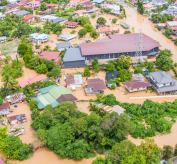
After Cyclone Ditwah: Climate-Proofing Sri Lanka’s Health System
As Sri Lanka currently counts human and economic costs of Cyclone Ditwah, the images are both disturbing and somewhat familiar: flooded hospitals, access roads buried by landslides, evacuation centres overflowing with displaced families, and officials in health and disaster management services scrambling to meet everyone’s needs. The death toll is at 355 and rising, with hundreds more missing and over 200,000 displaced, with effects being borne disproportionately in the central hills and low-lying river basins across the country. It has once again placed the spotlight on the preparedness of our disaster response ecosystem, and with climate-related disasters no longer a few and far between, Cyclone Ditwah is a tragic but predictable reminder and caution of the same vulnerabilities that have persisted for years.

Sri Lanka’s Struggle with Single-Use Plastics: Why Bans Alone Fall Short
By Sulochana Silva and Nishamini Ihalagedara The escalating crisis of plastic pollution poses a significant threat to both the health of the planet and human well-being. Among the plastic pollutants, Single-use plastics (SUPs) have become a major driver …

Priorities in Focus: Will Budget 2025 Address Sri Lanka’s Agricultural Challenges?
The agricultural sector in Sri Lanka has long been a pillar of the nation’s economy, yet its decline reflects a complex interplay of economic shifts, policy decisions, and underutilised potential. Agriculture’s contribution to the overall economy in Sri Lanka has gradually diminished over time, while the agricultural labour force has shrunk at a slower rate. This disparity between a declining sector and a stagnant workforce, coupled with the failure to address structural changes by improving land and labour productivity, has led to poor sector performance, particularly in terms of food security and farm income. Additionally, unproductive public spending in the form of inefficient allocation, short-term concentration, and neglect of crucial areas is an important contributory factor. In this context, it is crucial to assess whether public expenditure allocation in Sri Lanka has undergone significant shifts aimed at unlocking the agriculture sector’s potential while advancing food security and fostering rural development.
Demystifying Hawala/Undiyal – The Not So Dismal Science:[…] believed that informal fund transfer operations in Sri Lanka have expanded considerably due to the wide gap between the…