


Beyond the Crisis: Sectoral Paths to Durable Growth
The Sri Lankan economy has faced a series of external and internal shocks in recent years that weakened its long-term growth outlook. Despite defying post-crisis growth trajectories, fresh uncertainties from oil price shocks and climate-related risks suggest that the policy context to accelerate growth will be even more challenging. In this context, select policy recommendations to strengthen Sri Lanka’s economic foundations toward higher, durable growth are set out in this article. It draws on recent research by the Institute of Policy Studies of Sri Lanka (IPS), some of which is detailed in its forthcoming annual flagship report Sri Lanka: State of the Economy 2026.
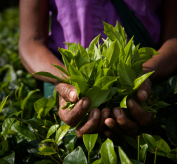
Sri Lanka’s Competitive Edge: Intellectual Property Rights and the Power of Geographical Indications
With Sri Lanka’s export competitiveness steadily declining in major destination markets amid global economic uncertainty, the need to explore innovative tools for sustaining export growth has become urgent. Improving export competitiveness is essential for robust growth. One powerful, yet often underutilised, tool in this effort is the country’s intellectual property rights (IPR) system.

Powering through Droughts and Crises: Redesigning Sri Lanka’s Energy Resilience
Sri Lanka has lived with energy insecurities for decades. Today, the crisis is a structural problem that is no longer limited to mere episodes. The country’s electricity system sits at the intersection of three converging vulnerabilities. Firstly, the system relies on a bimodal rainfall pattern that makes hydropower inherently boom-and-bust. Secondly, Sri Lanka has a near-total dependence on imported fossil fuels and limited use of other renewables, mainly rooftop solar, to fill the gaps. Thirdly, the country deals with an ageing grid infrastructure that is ill-equipped for the distributed energy future that could solve the problem.
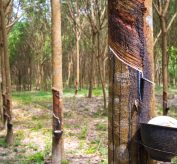
EUDR in 2025: Is Sri Lanka Ready for the EU’s New Deforestation Rules?
Sri Lanka faces a critical test with the EU’s Deforestation Regulation (EUDR) taking effect in December 2025. With rubber exports to the EU valued at over USD 330 million annually, compliance is vital. While large plantations may adapt easily, smallholder farmers who manage over two-thirds of rubber cultivation face digital and documentation challenges. Without targeted support, Sri Lanka risks losing market access, jobs, and GDP. This blog explores readiness, risks, and policy priorities for EUDR compliance.

Sri Lanka’s Struggle with Single-Use Plastics: Why Bans Alone Fall Short
By Sulochana Silva and Nishamini Ihalagedara The escalating crisis of plastic pollution poses a significant threat to both the health of the planet and human well-being. Among the plastic pollutants, Single-use plastics (SUPs) have become a major driver …
Demystifying Hawala/Undiyal – The Not So Dismal Science:[…] believed that informal fund transfer operations in Sri Lanka have expanded considerably due to the wide gap between the…