

Beyond the Crisis: Sectoral Paths to Durable Growth
The Sri Lankan economy has faced a series of external and internal shocks in recent years that weakened its long-term growth outlook. Despite defying post-crisis growth trajectories, fresh uncertainties from oil price shocks and climate-related risks suggest that the policy context to accelerate growth will be even more challenging. In this context, select policy recommendations to strengthen Sri Lanka’s economic foundations toward higher, durable growth are set out in this article. It draws on recent research by the Institute of Policy Studies of Sri Lanka (IPS), some of which is detailed in its forthcoming annual flagship report Sri Lanka: State of the Economy 2026.

Making Public Policy Work for Women: Lessons from Sri Lanka’s COVID-19 Response
One night during the pandemic, Nishanthi, a garment factory worker living in a boarding house in Katunayake, was suddenly told by military officers to pack her belongings and leave with the other women. There were 54 of them in …
GSP+: Can It Drive Inclusive Growth In Sri Lanka?
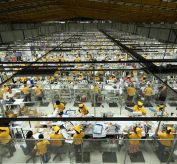
In a mid-October 2024 meeting with the European Union (EU) Ambassador, Sri Lanka reaffirmed its commitment to strengthening trade relations with the EU, particularly highlighting the role of the GSP+ programme in boosting Sri Lankan exports. This discussion underscores the significance of the GSP+, which offers tariff preferences for Sri Lanka’s exports to the EU. The GSP+ offers reduced tariffs on exports, conditional upon the recipient countries implementing 27 international conventions. These conventions include standards on labour and human rights, environmental sustainability, and good governance. Sri Lanka’s major exports to the EU, such as wearing apparel, employ low and medium-skilled, and female workers, as well as estate and rural sector workers, directing benefits of GSP+ to vulnerable communities.

Threads of Resilience: Is Sri Lanka’s Apparel Sector Prepared to Face Pathogen X?
The World Health Organization (WHO) is expressing concerns about the global community’s readiness for pathogen X, a highly contagious pathogen that could emerge in the future. Scientists predict a higher likelihood of its origin in tropical regions, placing Sri Lanka at considerable risk.
The COVID-19 pandemic severely impacted the livelihoods of millions of workers across Sri Lanka. The manufacturing sector, where workers are in very close proximity to one another, faced more challenging conditions than other sectors such as agriculture. Given the significance of the apparel industry in the manufacturing base and as a source of employment in Sri Lanka, this blog assesses the pandemic’s impact on female apparel workers and guide future policies to minismise the cost of similar episodes.

Why Promoting Decent Work Matters More Than Just Any Job for Sri Lankan Women
Sri Lanka’s low female labour force participation rate (FLFP) has received intense policy attention over the past several decades for many reasons. It is widely assumed that improving FLFP will not only empower women and reduce gender disparities but will also promote productivity and economic growth. Over the years, a popular strategy for promoting FLFP by successive governments has been to encourage self-employment opportunities or entrepreneurship. However, FLFP has remained below 35% for years. Self-employment jobs are highly vulnerable to economic fluctuations as social safety nets do not cover them. Furthermore, on average, self-employment income is lower than other types of income. This blog argues that to empower women and drive economic growth, policy should focus on facilitating women’s access to decent work over access to any job.
Demystifying Hawala/Undiyal – The Not So Dismal Science:[…] believed that informal fund transfer operations in Sri Lanka have expanded considerably due to the wide gap between the…