
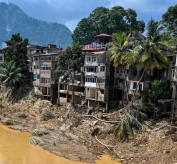

MSME Recovery in Post-Ditwah Sri Lanka: Turning Geographic Data into Action
The recent cyclonic storm Ditwah disrupted micro, small, and medium enterprises (MSMEs) islandwide, caused by production disruptions, infrastructure damage (including roads and mobile networks), supply-chain interruptions, and reduced access to markets. Rapid responses were necessary for the MSME sector to restart business operations and reconnect to markets. In fact, the effects of Cyclone Ditwah might amplify preexisting vulnerabilities in the MSME sector, including a heavy debt burden, informality, susceptibility to domestic demand shocks, and limited technical capacity to build climate resilience.
Technology for Change: Driving Structural Growth through Digitalisation in Sri Lanka
The launch of the IPS’ annual flagship publication, Sri Lanka: State of the Economy 2025, focused on ‘Technology for Change: Driving the Digital Economy’, explores how digital integration can be leveraged to facilitate structural reforms and sustain long-term economic growth in Sri Lanka. Digitalisation can boost growth through multiple means, including improving the competitiveness of trade, incentivising entrepreneurship, facilitating infrastructure, strengthening human capital, and enhancing resilience to shocks.

Occupational Exposure to GenAI in Sri Lanka
The first two infographics in this blog were created with Artificial Intelligence (AI) technology, resulting in production times of mere seconds. In contrast, creating similar infographics without AI would typically require several hours of work. This illustrates how AI significantly boosts worker productivity. Nearly every sector showcases examples of AI enhancing labour efficiency. For instance, online educational content can be effortlessly generated with AI by just inputting text.

Cracking the Code: Why Women’s Innovations are Lagging Behind in Sri Lanka
Despite nearly 50% of researchers in Sri Lanka being female, only 8% of patent applications issued were from women in the past five years. Many female innovators are unwilling to obtain Intellectual Property (IP) protection and commercialise their innovations for various reasons. One of the significant issues is the insufficient understanding of Intellectual Property Rights (IPRs) and their application. Given that this year’s World IP Day, observed on April 26, focuses on “Women and IP: Accelerating Innovation and Creativity”, it is timely to explore the state of women’s innovations in Sri Lanka and consider possible strategies to promote better IP protection for women’s creativity and innovations.

Bridging the Gap: Unlocking Untapped Potential in Sri Lanka’s Agricultural Exports
The government is giving renewed emphasis to increasing agriculture exports to manage the trade deficit and foreign debt burden. Most recently, a draft national agricultural policy has been prepared, with comments being sought from relevant stakeholders. This blog highlights gaps in the international market which the agriculture sector can target, identifies factors impeding export-sector growth in agriculture, and suggests solutions for unlocking the untapped potential in this vital sector.
Demystifying Hawala/Undiyal – The Not So Dismal Science:[…] believed that informal fund transfer operations in Sri Lanka have expanded considerably due to the wide gap between the…