

Beyond the Crisis: Sectoral Paths to Durable Growth
The Sri Lankan economy has faced a series of external and internal shocks in recent years that weakened its long-term growth outlook. Despite defying post-crisis growth trajectories, fresh uncertainties from oil price shocks and climate-related risks suggest that the policy context to accelerate growth will be even more challenging. In this context, select policy recommendations to strengthen Sri Lanka’s economic foundations toward higher, durable growth are set out in this article. It draws on recent research by the Institute of Policy Studies of Sri Lanka (IPS), some of which is detailed in its forthcoming annual flagship report Sri Lanka: State of the Economy 2026.
Strengthening Sri Lanka’s SSB Regulations: Addressing the Rise of Non-Sugar Sweeteners
Non-communicable diseases (NCDs) accounting for nearly 75% of all deaths, have emerged as a major health challenge in Sri Lanka over the past few decades. Unhealthy dietary patterns – including excessive intake of sugar, salt, and fats – continue to play a significant role in this escalating issue.
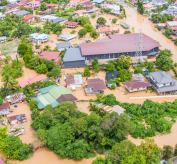
After Cyclone Ditwah: Climate-Proofing Sri Lanka’s Health System
As Sri Lanka currently counts human and economic costs of Cyclone Ditwah, the images are both disturbing and somewhat familiar: flooded hospitals, access roads buried by landslides, evacuation centres overflowing with displaced families, and officials in health and disaster management services scrambling to meet everyone’s needs. The death toll is at 355 and rising, with hundreds more missing and over 200,000 displaced, with effects being borne disproportionately in the central hills and low-lying river basins across the country. It has once again placed the spotlight on the preparedness of our disaster response ecosystem, and with climate-related disasters no longer a few and far between, Cyclone Ditwah is a tragic but predictable reminder and caution of the same vulnerabilities that have persisted for years.
SHAPE-Asia: Hand in Hand for Healthier Diets and Lasting Change
In 2024, an estimated 31.9% of the global population struggled to afford a healthy diet, including 28.1% in Asia and a concerning 42.9% in Sri Lanka. Moreover, unhealthy diets around the world are believed to be behind more than a quarter of all deaths caused by non-communicable diseases (NCDs), with 11 million NCD deaths per year due to poor eating habits. These alarming numbers underscore the urgency of reshaping our food environments and improving access to healthy diets.

Making Public Policy Work for Women: Lessons from Sri Lanka’s COVID-19 Response
One night during the pandemic, Nishanthi, a garment factory worker living in a boarding house in Katunayake, was suddenly told by military officers to pack her belongings and leave with the other women. There were 54 of them in …
Demystifying Hawala/Undiyal – The Not So Dismal Science:[…] believed that informal fund transfer operations in Sri Lanka have expanded considerably due to the wide gap between the…