


Making Public Policy Work for Women: Lessons from Sri Lanka’s COVID-19 Response
One night during the pandemic, Nishanthi, a garment factory worker living in a boarding house in Katunayake, was suddenly told by military officers to pack her belongings and leave with the other women. There were 54 of them in …
GSP+: Can It Drive Inclusive Growth In Sri Lanka?
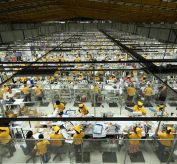
In a mid-October 2024 meeting with the European Union (EU) Ambassador, Sri Lanka reaffirmed its commitment to strengthening trade relations with the EU, particularly highlighting the role of the GSP+ programme in boosting Sri Lankan exports. This discussion underscores the significance of the GSP+, which offers tariff preferences for Sri Lanka’s exports to the EU. The GSP+ offers reduced tariffs on exports, conditional upon the recipient countries implementing 27 international conventions. These conventions include standards on labour and human rights, environmental sustainability, and good governance. Sri Lanka’s major exports to the EU, such as wearing apparel, employ low and medium-skilled, and female workers, as well as estate and rural sector workers, directing benefits of GSP+ to vulnerable communities.

A Lost Development Opportunity: Regional Integration to Empower Sri Lankan Women
Addressing gender inequality is crucial to achieve stronger and more sustainable development. While regional integration is seen as a potential development strategy to promote inclusive and sustainable growth and efforts toward women’s economic empowerment, gender equality tends to be sidelined in such discussions. Thus, identifying and implementing the right policy mix for meaningful regional integration is vital in creating gender inclusive sustainable growth.
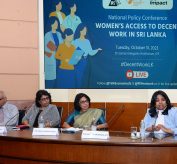
Empowering Sri Lankan Women: Highlights from the National Policy Conference on Women’s Access to Decent Work in Sri Lanka
The Institute of Policy Studies of Sri Lanka (IPS) recently conducted a thought-provoking discussion aimed at improving women’s access to decent work in Sri Lanka. The event, titled the ‘National Policy Conference on Women’s Access to Decent Work,’ was organised in collaboration with the Partnership for Economic Policy (PEP) and Co-Impact and took place at the Dr Saman Kelegama Auditorium, IPS.

Why Promoting Decent Work Matters More Than Just Any Job for Sri Lankan Women
Sri Lanka’s low female labour force participation rate (FLFP) has received intense policy attention over the past several decades for many reasons. It is widely assumed that improving FLFP will not only empower women and reduce gender disparities but will also promote productivity and economic growth. Over the years, a popular strategy for promoting FLFP by successive governments has been to encourage self-employment opportunities or entrepreneurship. However, FLFP has remained below 35% for years. Self-employment jobs are highly vulnerable to economic fluctuations as social safety nets do not cover them. Furthermore, on average, self-employment income is lower than other types of income. This blog argues that to empower women and drive economic growth, policy should focus on facilitating women’s access to decent work over access to any job.
Demystifying Hawala/Undiyal – The Not So Dismal Science:[…] believed that informal fund transfer operations in Sri Lanka have expanded considerably due to the wide gap between the…