- Home
- Policy Priorities for Resilient Food, Urban, and Energy Systems: IPS Roundtable Highlights
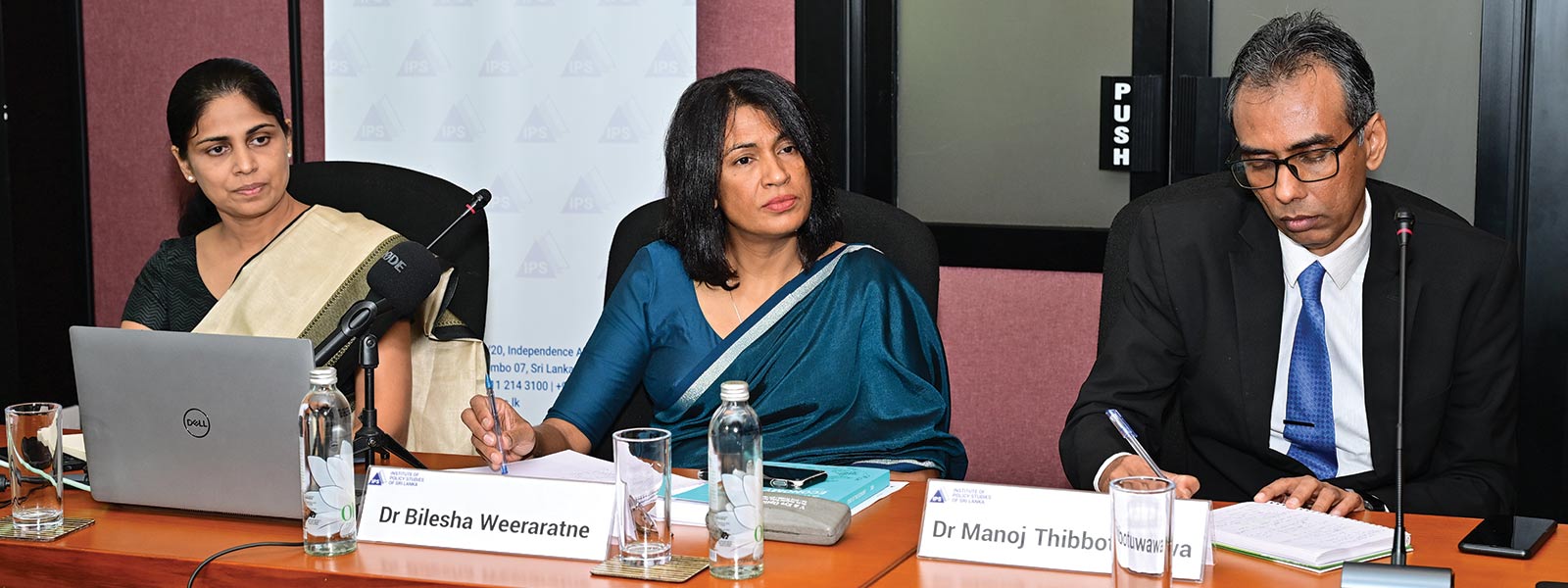
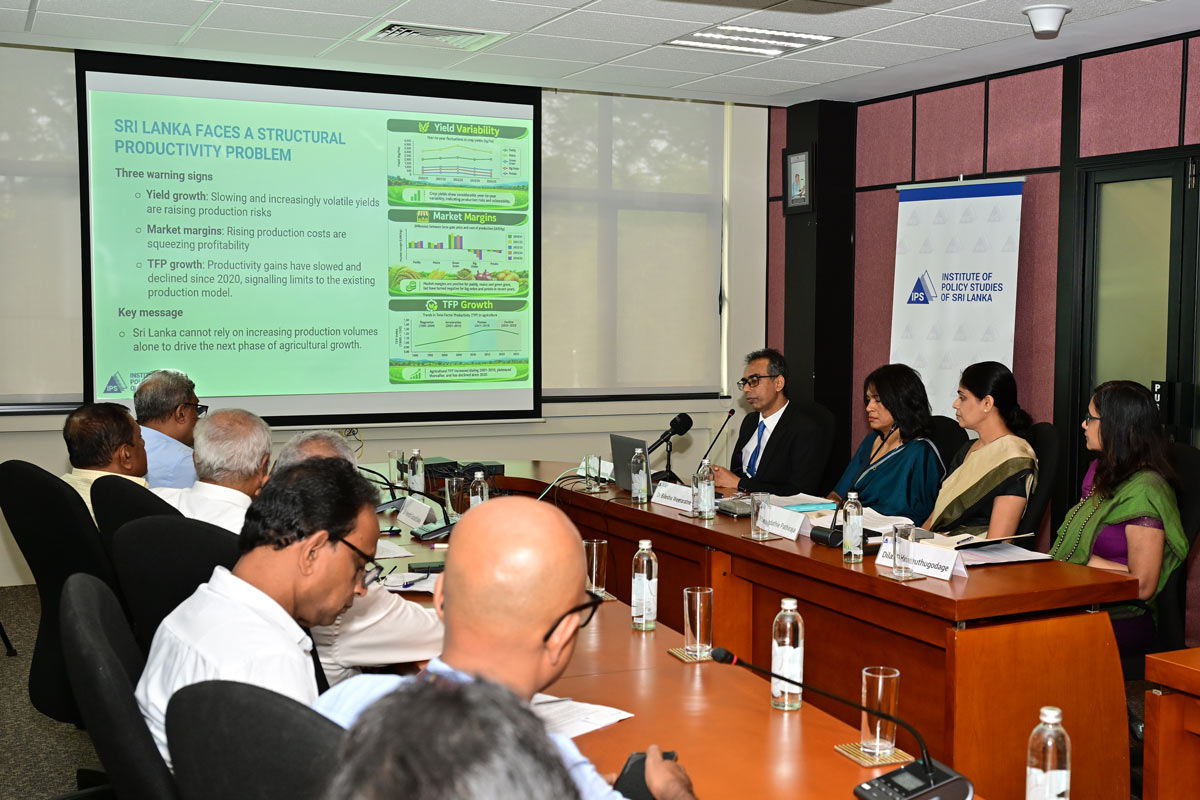
As Sri Lanka pursues sustained growth, building resilience across food, urban, and energy systems is essential to withstand economic, environmental, and demographic challenges while supporting long-term development. At a roundtable discussion held on 27 October 2026 under the theme ‘Durable Growth: Designing Resilient Food, Urban, and Energy Systems’, Dr Manoj Thibbotuwawa, Dr Bilesha Weeraratne, and Dr Erandathie Pathiraja, Research Fellows at the Institute of Policy Studies of Sri Lanka (IPS), discussed key findings from the newly released Sri Lanka: State of the Economy 2026 report. The event marked the conclusion of the three-part roundtable series organised around the report’s key policy reccomendations.
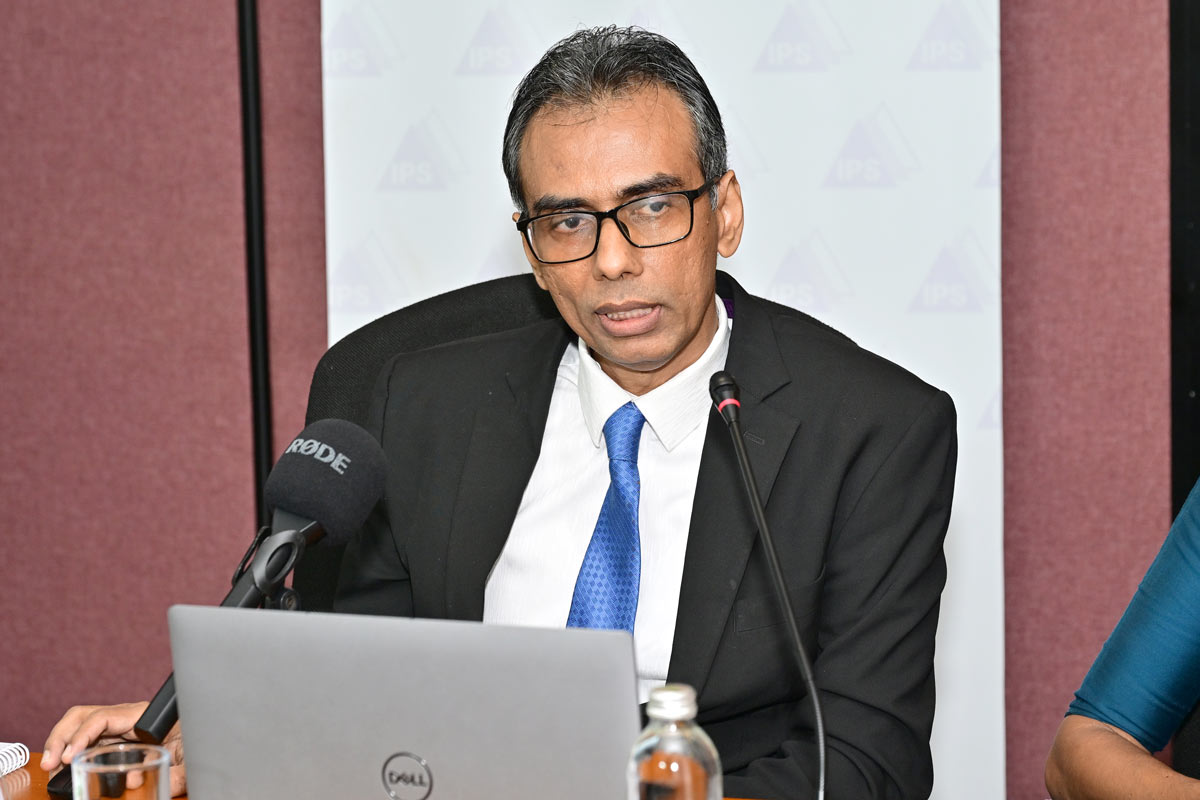
Presenting on agricultural transformation and food system resilience, Dr Manoj Thibbotuwawa highlighted the structural productivity challenges facing Sri Lanka’s agriculture sector, including slowing yield growth, rising production costs, and declining total factor productivity. Emphasising the need for a strategic shift, he noted, “Sri Lanka cannot rely on increasing production volumes alone to drive the next phase of agricultural growth.” He stated that future agricultural growth must come from creating greater economic value through productivity improvements, value addition, stronger market integration, and resilience across the agrifood system. Dr Thibbotuwawa also stressed that agricultural productivity should be viewed as a whole-value-chain issue rather than a farm-level concern alone.
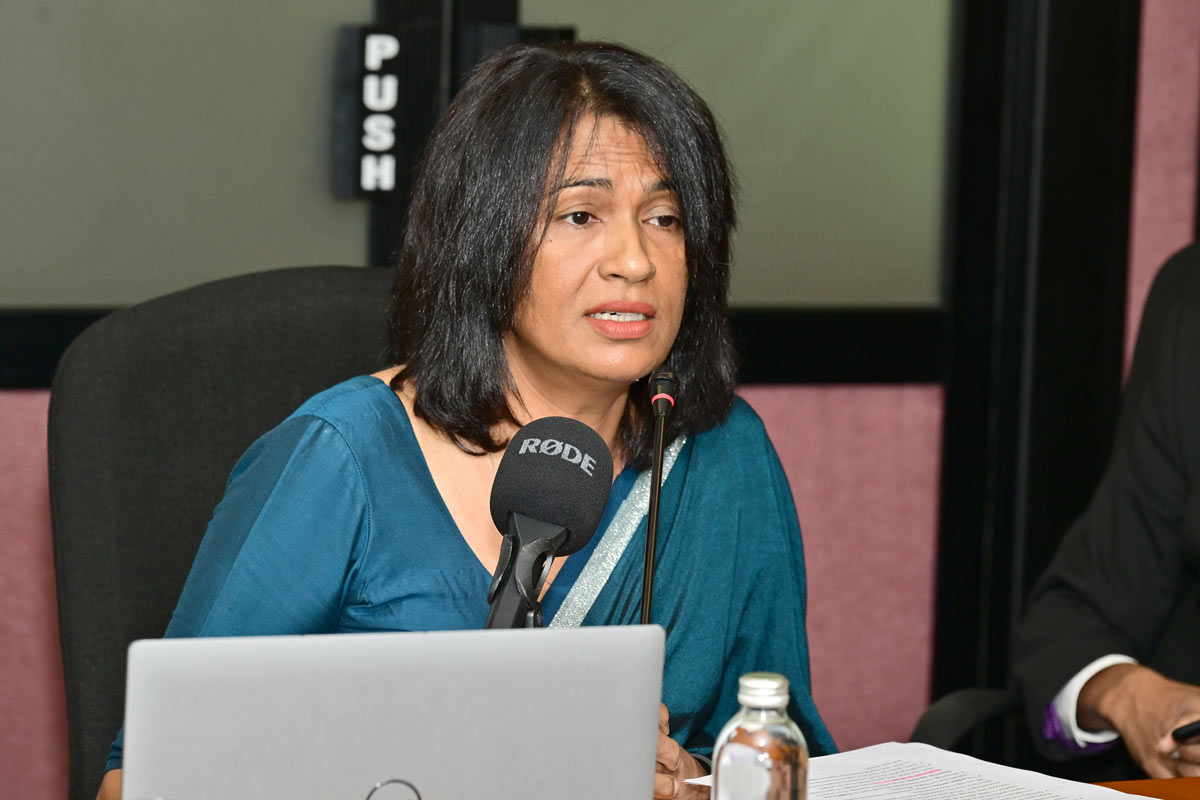
Addressing urbanisation and regional development, Dr Bilesha Weeraratne discussed how urbanisation shapes economic opportunities across sectors and regions. Stressing the importance of urbanisation for the country’s next phase of growth, Dr Weeraratne observed, “Urbanisation attributes like proximity, scale, and connectivity complement and are much-needed preconditions for Sri Lanka’s next phase of robust economic growth.”
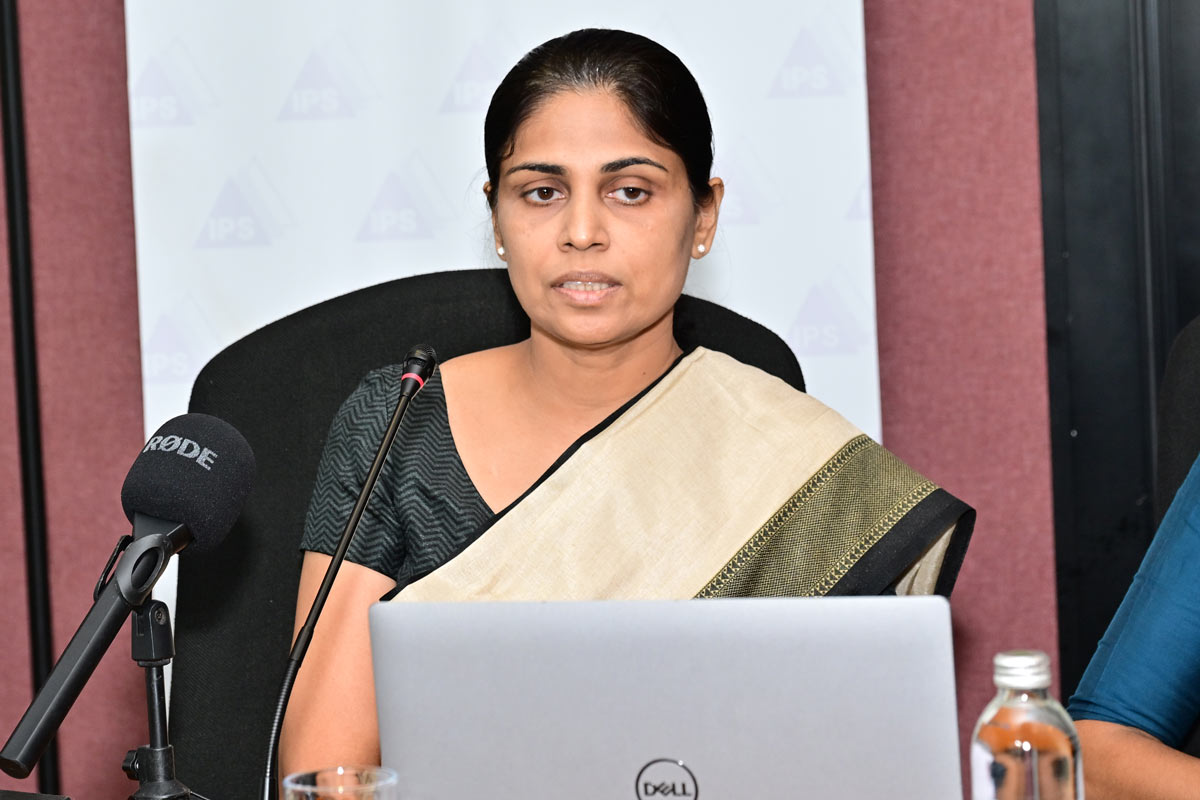
Speaking on energy resilience, Dr Erandathie Pathiraja highlighted the strategic importance of the renewable energy transition for Sri Lanka’s energy security, economic competitiveness, and long-term growth. She noted that 45% of the country’s energy supply continues to come from imported petroleum and coal, exposing Sri Lanka to external shocks and price volatility. “While climate change mitigation is the primary global driver of the renewable energy transition, its significance extends beyond environmental goals; it also bolsters energy security, economic competitiveness, and durable growth” explained Dr Pathiraja, emphasising the broader economic benefits of renewable energy.
The discussion also included floor interventions from a panel of experts, namely Prof. Emeritus Amal Kumarage from Transport Management and Logistics Engineering, University of Moratuwa; Dr Herath M. Gunatilake, Natural Resource and Energy Economist and Environmental Specialist; and Dr Fredrick Abeyratne, Consultant in Agricultural Economics. Drawing on their expertise, the panellists reflected on key policy priorities for enhancing resilience in food, urban, and energy systems.
The roundtable series laid the foundation for continued engagement on Sri Lanka’s long-term development priorities. Building on these discussions, IPS remains committed to fostering evidence-based policy dialogue and convening diverse stakeholders to advance solutions for durable, inclusive, and resilient economic growth.