- Home
- Dr Pulasthi Amarasinghe Spotlights the Critical Need for the Accurate Targeting of Welfare Support and Evaluates Existing Social Protection Mechanisms

22 May 2025
In the wake of Sri Lanka’s 2022 economic crisis, poverty levels rose to 25% from 11.3% in 2019, and the accurate targeting of welfare support is more critical than ever, said IPS Research Fellow Dr Pulasthi Amarasinghe, suggesting improvements to the government’s current social registry.
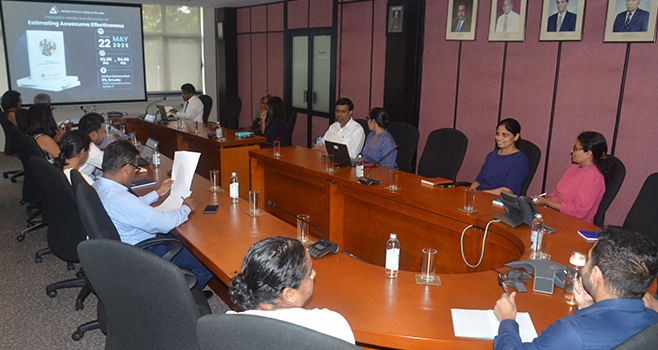
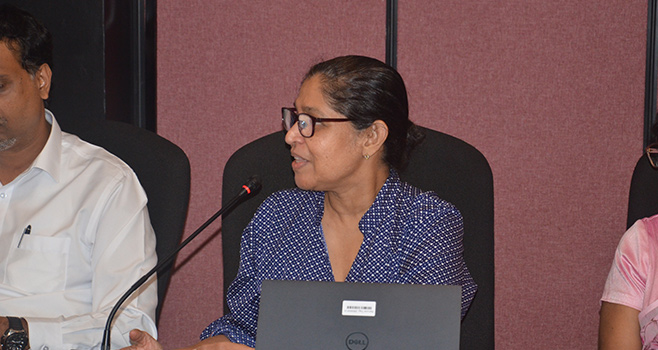
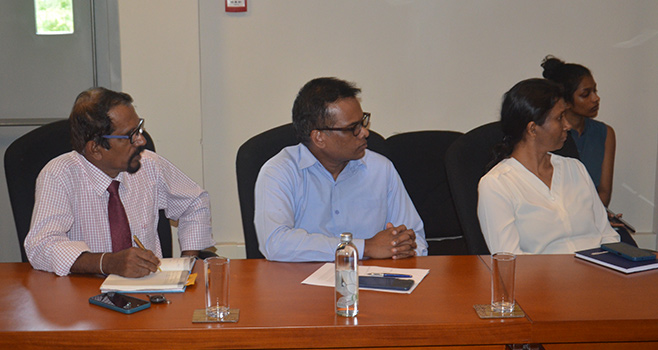
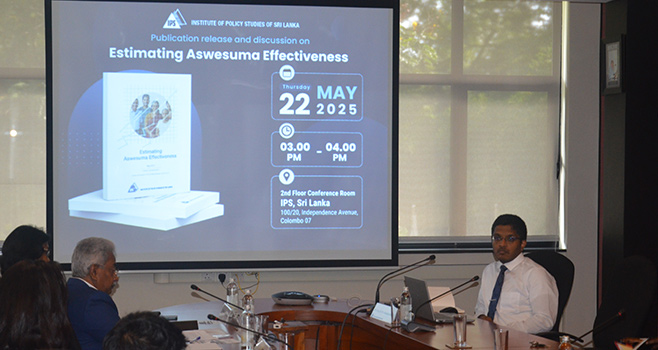
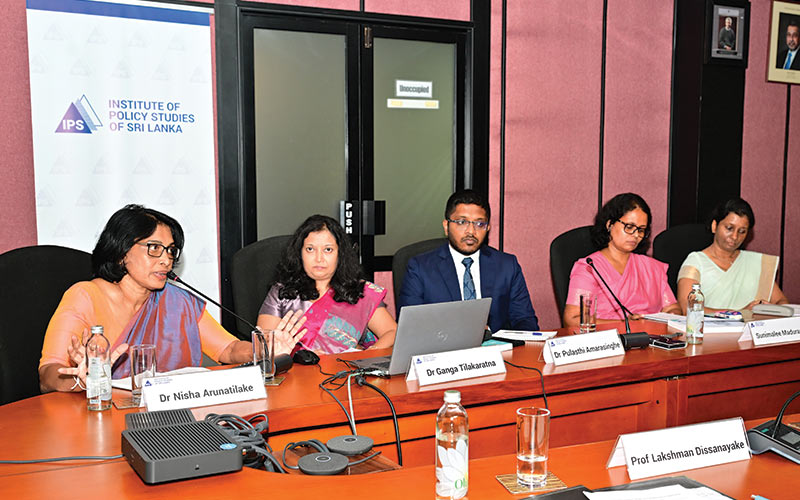
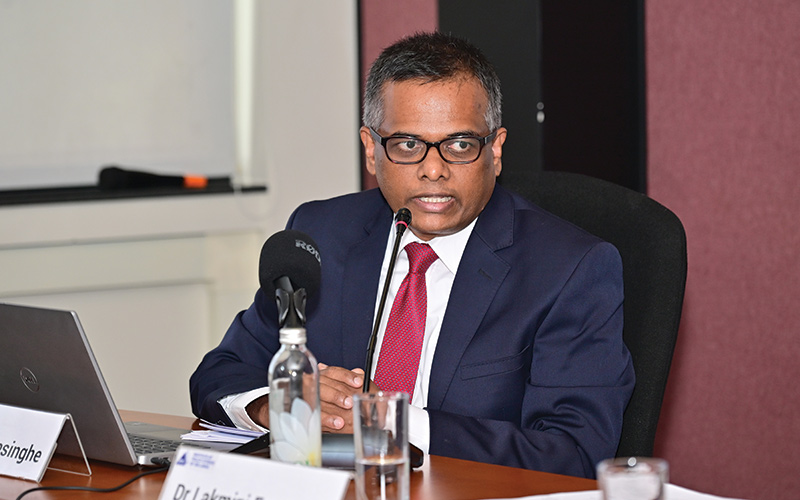
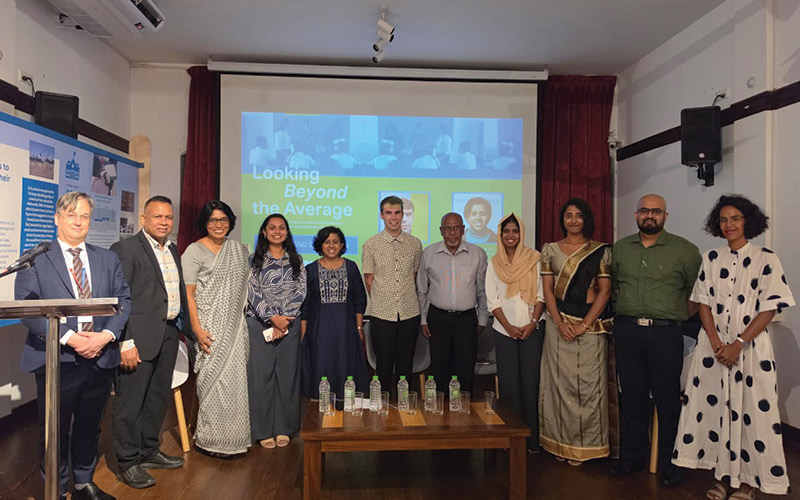
He made these comments during a presentation at the publication launch of Estimating Aswesuma Effectiveness and the subsequent roundtable discussion, which was held recently at the IPS second-floor conference room.
Dr Amarasinghe’s latest study simulates the effectiveness of the Aswesuma scheme’s criteria in identifying poor households and the predicted effects of cash transfers on food insecurity, indebtedness, and labour force participation.
The publication also reveals that Aswesuma-eligible households are more deprived of the 22 poverty indicators used to capture poverty than Samurdhi recipients who are not eligible for Aswesuma. It also reveals that the process of “graduation” from poverty through cash transfers via the Aswesuma programme may not be sufficient for those in chronic poverty, which is a state of poverty that lasts for a prolonged period, sometimes across generations.
Moreover, one of the key findings of the publication is that 40% of food-insecure households are not eligible for Aswesuma, highlighting the challenge of capturing transient poverty, where individuals or households are temporarily pushed below the poverty line due to negative shocks or events, such as the 2022 economic crisis in Sri Lanka.
Dr Amarasinghe noted that the simulated Aswesuma transfers, which were compiled using data from the 2019 Household Income and Expenditure Survey (HIES), predicted a reduction in food insecurity by 2.6 percentage points, at the cost of a decrease in labour force participation. He also noted that adding disaster exposure to the eligibility criteria of the aswesuma programme enhances coverage and more effectively identifies high-risk households.
As such Dr Amarasinghe’s recommendations were as follows:
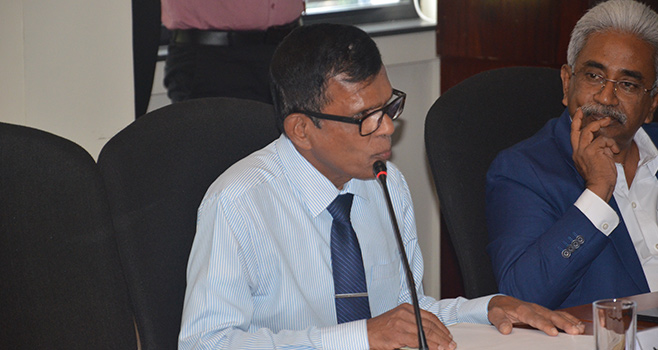
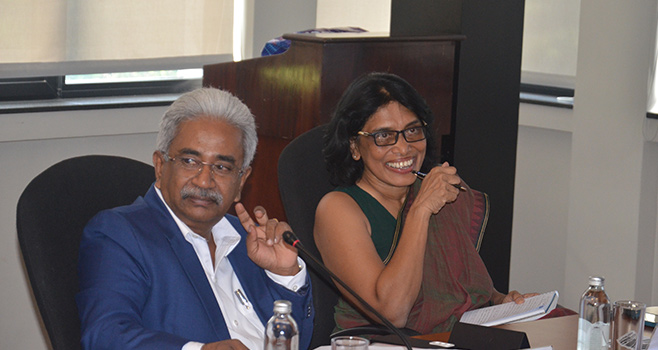
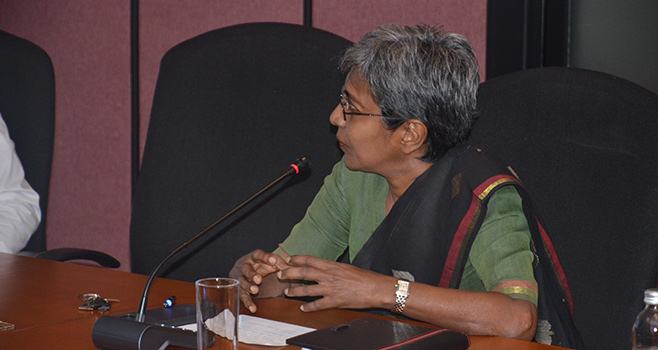
Present at the publication launch and round table discussion were Sarvodaya President Dr Vinya Ariyaratne, Welfare Benefits Board Additional Commissioner Mr R.P. R. Rajapaksa and other stakeholders. Dr Nisha Arunatilake, IPS’ Director of Research, moderated the discussion and question and answer session afterwards.
Dr Ariyaratne challenged the common misconception that Aswesuma will bring about poverty alleviation and pointed out that all citizens of Sri Lanka should be part of the government’s social registry, especially due to the vulnerability posed by natural and human-induced disasters such as riots.
“Because of the economic crisis, the programme was fast-tracked, and only the cash transfer benefits were implemented. However, the selection criteria and the deprivation score must improve after careful study,” said Dr Ariyaratne.
Adding to the discussion, Mr. Rajapaksa highlighted that the government plans to bring all welfare benefit schemes, such as the Aswesuma and Samurdhi programme, under one umbrella.
“It is important to have a suitable system that can support our existing database for the social registry, using the selection criteria. Our development officers do all data gathering,” he said.
You can download your copy of Estimating Aswesuma Effectiveness here.