

- Home
- Manufacturing Exports from Sri Lanka: Opportunities, Achievements and Policy Options
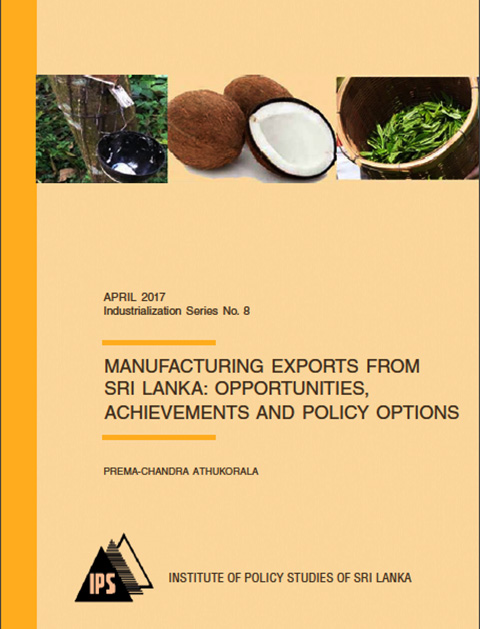
Series : Industrialization
This paper examines Sri Lanka’s experience with manufacturing exports expansion, placing emphasis on opportunities and policy priorities in a rapidly changing global context in which global production sharing has become the prime mover of cross border production and trade. There is compelling evidence that liberalization reforms initiated in 1977 helped transform the classical export economy of Sri Lanka inherited from the colonial era into a one in which manufacturing plays a significant role. Were it not for the civil strife and inconsistent macroeconomic policies that adversely affected the investment climate, export performance would have been much more impressive.
In a context in which factors of production – capital, technology and marketing and managerial knowhow-are increasingly mobile across national boundaries within production networks, the nature of the existing manufacturing base is not a prerequisite for export diversification. Trade-cum-investment policy reforms can set the stage for the emergence of exporting firms de novo. In sum, the findings make a strong case for redressing policy backsliding and continue with the market-oriented reforms agenda that was left incomplete in the late 1990s, and set up institutional safeguards to avert further backsliding.

Publication
Available for sale at IPS and leading bookshops island-wide.
Contact
Mob: +94776099898
Tel: +94-11-2143 100 / +94-11-2665068
Email: [email protected]
Price
US$ 15 (for hardcopy)
ISBN
978-955-7397-00-9
Published Year
April 2017
