- Home
- IPS Contributes Insights towards Strengthening Access to Essential Medical Products in Asia-Pacific

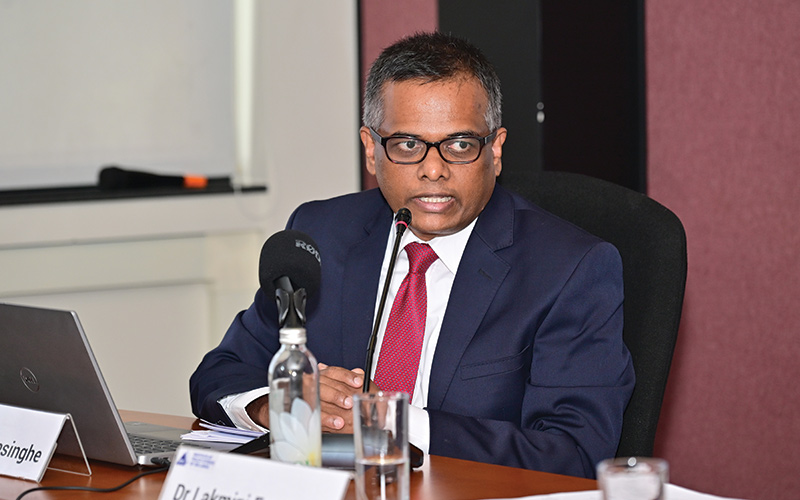
“Sri Lanka’s health sector has faced significant challenges in securing pharmaceuticals amid the combined pressures of the recent pandemic, the economic crisis, and increasing global protectionism,” highlighted Dr Asanka Wijesinghe, Research Fellow at the Institute of Policy Studies of Sri Lanka (IPS), during his presentation of Sri Lanka’s experience on trade and industrial policy perspectives in improving access to essential medical products. Dr Wijesinghe presented these challenges at a project synthesis meeting convened by the United Nations Economic and Social Commission for Asia and the Pacific (ESCAP) under its initiative on ‘Regional integration and cooperation to promote affordable and equitable access to vaccines, diagnostics and therapeutics in the Asia-Pacific region.’ The meeting which was held on 28-29 May 2026, brought together policymakers, experts, and regional partners to reflect on lessons learned and identify policy pathways to strengthen health system resilience and promote equitable access to essential medical products.
Dr Wijesinghe also discussed how import restrictions and vaccine nationalism among developed countries have constrained access to affordable supplies. He pointed to the need to establish a predictable trade policy, introducing zero tariffs on raw materials rather than relying on waivers.
“Prioritising self-sufficiency over comparative advantage leads to higher local prices,” noted Dr Wijesinghe. “This, in turn, reduces the quantity of medicines the government can procure within a fixed health budget.” He underscored the importance of integrating regional value chains, particularly in pharmaceutical formulation and medical accessories.
The meeting reinforced key policy priorities, including removing trade distortions, reforming tariff structures, improving access to procurement, and strengthening regulatory efficiency, alongside a shared call for enhanced regional cooperation, trade facilitation, and strategic policy alignment to ensure equitable access to essential medical products and strengthen preparedness for future health emergencies.