- Home
- Navigating Trade Shifts: IPS Explores Opportunities and Risks for Sri Lankan Exporters

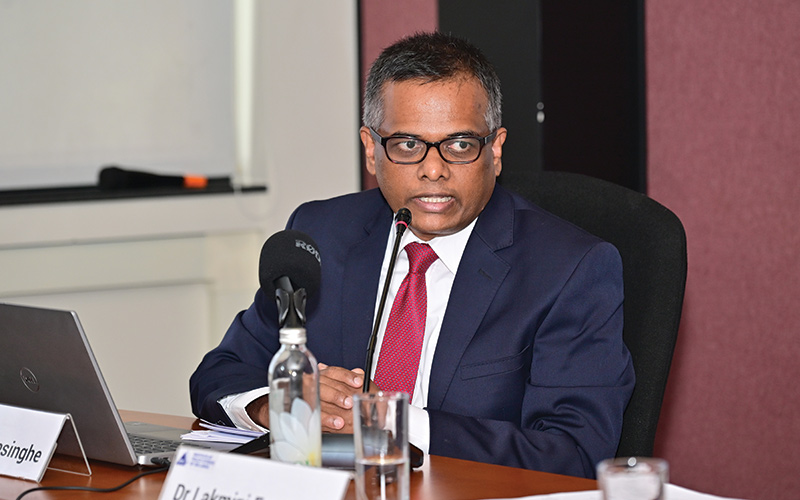
“Achieving Sri Lanka’s 7% growth target requires a significant expansion of exports, but the key challenge is whether the country can keep pace with competitors that are moving aggressively to secure preferential access to key export markets,” noted Dr Asanka Wijesinghe, Research Fellow at the Institute of Policy Studies of Sri Lanka (IPS), delivering the keynote address at a networking meeting for exporters and importers organised by the Commercial Bank of Ceylon PLC on 14 August 2026.
The event brought together executives of exporting and importing firms from the Katunayake Free Trade Zone and the North Western Province, business owners, and bank treasury officials. Speaking on “Navigating Global Geopolitics, Trade Shifts, and Opportunities for Exporters,” Dr Wijesinghe emphasised that export growth is central to achieving Sri Lanka’s growth ambitions. He observed that while the European Union, the United States, and the United Kingdom account for 58% of Sri Lanka’s exports, the country’s competitiveness in these markets is increasingly challenged as major competitors continue to secure preferential trade access through new trade agreements.
“Sri Lanka’s relative tariff position is becoming increasingly vulnerable as competitors secure preferential access through new trade agreements,” Dr Wijesinghe observed. Drawing on recent developments in global trade, he highlighted the implications of trade agreements concluded by countries such as India and Indonesia with the EU and UK, noting that Sri Lanka could face a relative tariff disadvantage if it loses existing preferential access arrangements. He stressed that sustaining higher economic growth will require proactive efforts to secure favourable trade agreements and strengthen market access. Following the keynote address, Dr Wijesinghe joined a panel discussion with Commercial Bank treasury officials on Sri Lanka’s macroeconomic and foreign exchange outlook, trade policy priorities, and the country’s options beyond the current IMF-supported programme. The session equipped participants with a deeper understanding of emerging trade and geopolitical developments shaping market access and export opportunities for Sri Lankan firms.