- Home
- IPS Research Fellow Highlights Forest Restoration Economics as a Carbon Mitigation and Nature-based Solution in South Asia

The growing intensity and frequency of extreme weather events, including heat waves, cyclones, heavy rainfall, and prolonged droughts, are increasingly threatening lives and livelihoods worldwide, underscoring the urgent need for effective climate action. In this context, Sri Lanka, as a signatory to the Paris Agreement, has pledged to increase carbon sequestration in the forestry sector by 7% by 2030 through forest restoration and improved forest management. Dr Erandathie Pathiraja explained that such efforts must be approached with care. “Expanding tree cover alone can undermine the livelihoods of forest-dependent communities and jeopardise conservation goals,” she discussed, highlighting the importance of identifying the social and environmental drivers that can deliver durable, positive outcomes and ensure the long-term sustainability of restoration programmes.
Dr Erandathie Pathiraja, Research Fellow of the Institute of Policy Studies of Sri Lanka (IPS), made these observations during her presentation of the Sri Lankan study on the Farmers’ Woodlot Programme at the final dissemination workshop of the cross-country study on Economics of Forest Restoration as Carbon Mitigation and Nature-based Solutions in South Asia, held on 12 December in Nepal.
Dr Pathiraja’s contribution formed part of a multi-country initiative led by SANDEE (South Asian Network for Development and Environmental Economics), a research capacity-building and academic leadership programme of ICIMOD (International Centre for Integrated Mountain Development), funded by the International Development Research Centre (IDRC), Canada. The initiative examines the economics of forest restoration as a carbon mitigation strategy and its distributional impacts on gender and marginalised groups in Bangladesh, Nepal, Pakistan, and Sri Lanka.
Dr Pathiraja’s key findings included:
The presentations were followed by a panel discussion with policy community representatives from all four countries, including Mr. S.C. Palamakumbura, the Conservator General of the Forest Department of Sri Lanka.
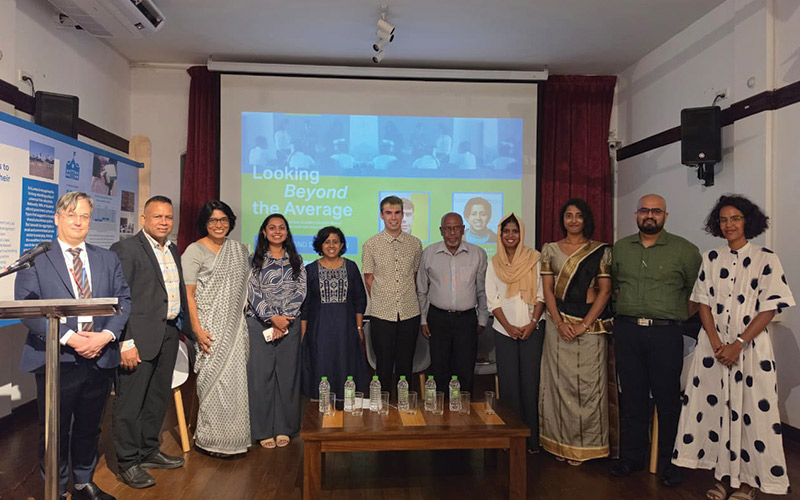
The dissemination workshop brought together researchers and policy communities from all four countries to discuss the research findings and their policy implications. It was linked to SANDEE’s 25-year celebration of developing research capacity and academic leadership in the region, alongside the three-day international conference “Development and Environmental Economics: SANDEE@25”.