- Home
- IPS Research Fellow Says Uneven Climate Spending, Persistent Underspending, and Delays Undermine the Effectiveness of Sri Lanka’s Climate Interventions

“Although climate-related spending is on the rise, it is very unevenly distributed among different sectors, with underspending and delays limiting the effectiveness of planned interventions,” explained Dr Manoj Thibbotuwawa, Research Fellow and Head of Agricultural Economic Policy of the Institute of Policy Studies of Sri Lanka (IPS). Dr Thibbotuwawa demonstrated how climate-related spending has evolved across sectors from 2016—2025, the distribution of resources across mitigation and adaptation priorities, trends in budget execution, and the challenges posed by the absence of climate classifications in the national budget system.
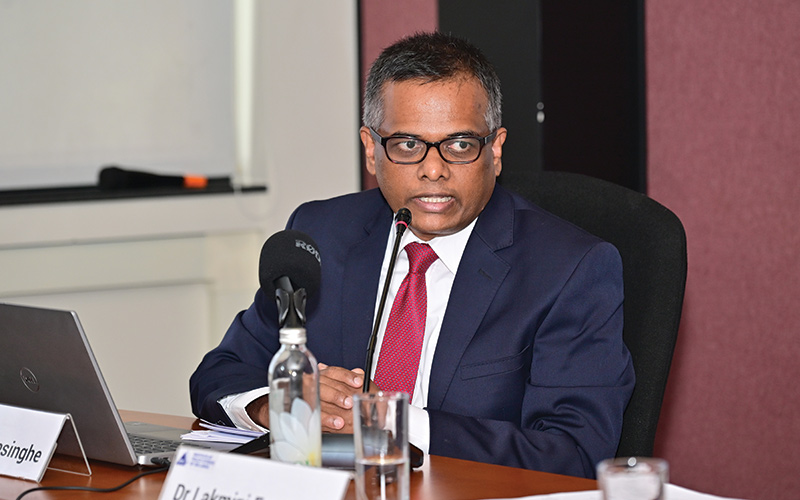
Dr Thibbotuwawa during the Validation Workshop of the Climate Public Expenditure and Institutional Review (CPEIR), held on 17 December at the Hilton Residencies, Colombo. The event was a collaborative effort between the National Budget Department (NBD) of the Ministry of Finance, the United Nations Development Programme (UNDP), and the Government of the United Kingdom’s Climate Action for a Resilient Asia.
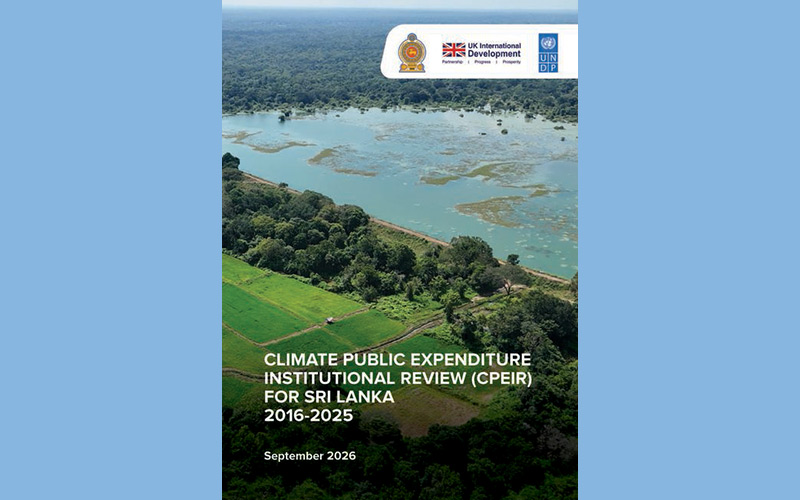
Dr Thibbotuwawa was a key contributor towards the CPEIR process. The review is complete with a decade-long analysis of Sri Lanka’s climate-related spending, institutional frameworks, policy alignment, and recommendations to strengthen resilience and a achieve net-zero goals.
The workshop brought together a wide range of experts and officials from the Ministry of Finance, sector ministries, provincial authorities, research institutions, academia, and development partners. The validation workshop is a key milestone in the journey of Sri Lanka to integrate climate issues into fiscal policy, enhance transparency, and to promote a climate-resilient development pathway by more strategic and evidence-based public expenditure management.