- Home
- IPS Presents Evidence-Based Insights on Repositioning South Asia–Gulf Interdependencies at the Annual Gulf Research Meeting

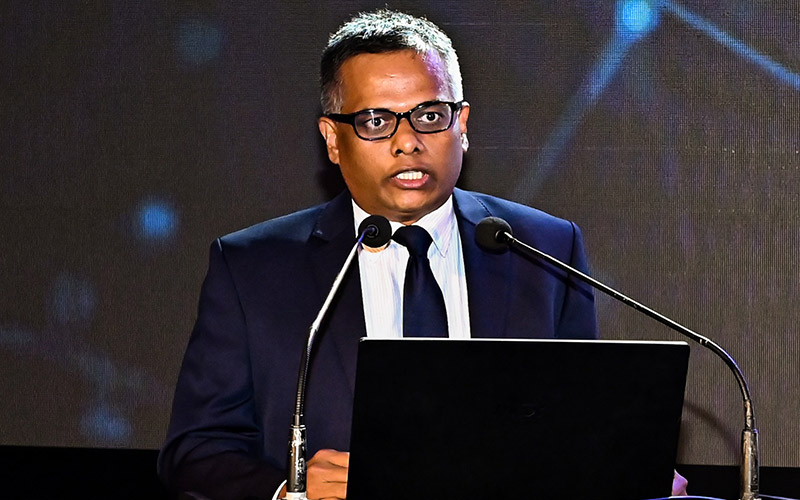
The nexus between South Asia and Gulf Cooperation Council countries could be repositioned towards a more sophisticated, multi-dimensional development partnership, beyond labour migration, remittances, and oil trade,” noted Dr Bilesha Weeraratne, Research Fellow and Head of Migration Policy Research at the Institute of Policy Studies of Sri Lanka (IPS), presenting at the 16th Annual Gulf Research Meeting (GRM) 2026, held at the Cambridge University from 21-23 July 2026.
Dr Weeraratne’s presentation, titled “Repositioning South Asia–Gulf Interdependencies for Economic Diversification and Development: Evidence from Sri Lanka,” was delivered at a workshop on Gulf–South Asia relations in an era of deepening interdependence. Using Sri Lanka’s relationship with the United Arab Emirates (UAE) and Saudi Arabia as a case study, the presentation examined how the two regions could move beyond a purely labour and trade-based exchange towards a broader development partnership.
The analysis pointed to opportunities for Sri Lanka to connect with Gulf economies through their future visions, including expanding tourism revenue and skilled-worker migration, attracting foreign investment in logistics, energy and industrial production, and developing human capital, IT, and AI skills. The analysis contrasted Saudi Arabia’s Vision 2030 and the UAE’s Centennial 2071, which provide clear strategic blueprints for long-term growth, with Sri Lanka’s economic stagnation, noting that a persistent lack of policy continuity since independence in 1948 has severely hindered the country’s development potential.
The presentation concluded that maximising positive interdependencies and minimising negative ones between Sri Lanka and Gulf countries offers valuable direction for Sri Lanka and evidence for other South Asian countries.